How to reduce packaging waste when buying pantry staples
· Editorial team orlandonewsdaily7.com
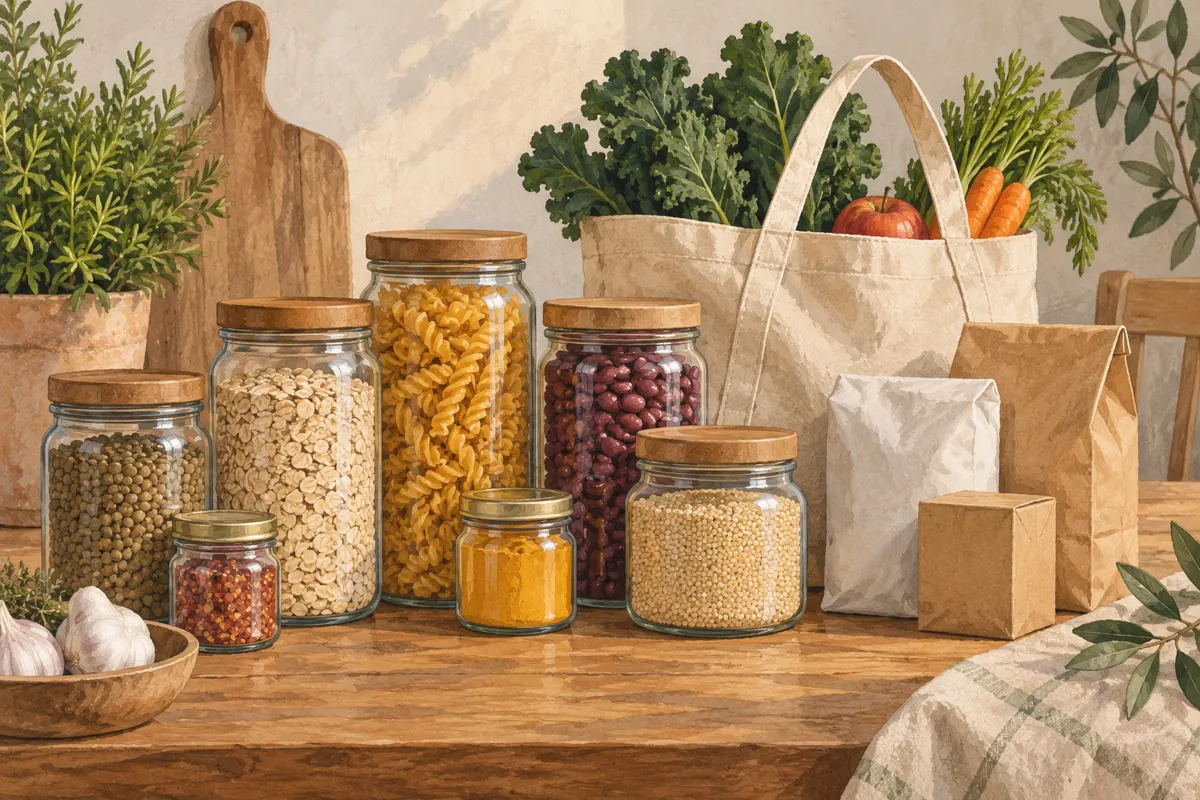
Reduce packaging waste by checking your pantry before shopping, using refill options where available, and choosing quantities your household will finish. Start with staples you already buy regularly, such as rice, oats, pasta, and beans. A repeatable routine makes these choices easier without requiring a complete change in where you shop.
Check what you have before making a list
Avoiding an unnecessary purchase also avoids its packaging. Before heading to the store, look through your cupboards and check how much remains in open bags, boxes, and jars. Include staples tucked behind other items so you do not buy another package simply because the first one is out of sight.
Our proposed starting routine is a short pantry check linked to the meals you expect to make before your next shopping trip:
- Check open packages of your usual staples.
- Choose meals that use what is already available.
- Write down only the missing ingredients and quantities.
- Note which items could be bought as refills.
Keep the list specific. “Oats for next week” is more useful than “breakfast supplies,” which leaves room for extra purchases you may not need.
Try refills for one familiar staple
Refill shopping lets you use a reusable container and select the amount you need. Availability and store procedures vary, so check whether your usual store has suitable dispensers and accepts containers from home. Begin with one familiar staple instead of trying to replace every packaged item at once.
- Check the store’s container rules before your trip.
- Bring a clean, dry container suitable for food, with a secure lid.
- Have the empty container weighed or its tare weight recorded as the store requires.
- Fill it with the quantity on your list and record any required product code.
- Follow the store’s weighing and checkout process so the container’s weight is excluded.
Ask staff for help on your first visit. If the store requires its own bags or containers, factor that into your choice. A refill option is most useful when you can fit it into a shopping routine you will keep.
Compare the whole package
When refills are unavailable, compare the packaging around similar products. One larger package can use less packaging than several smaller packages containing the same total amount. However, check inside the outer package: a large box of individually wrapped portions still contains those separate wrappers.
- Look for a single bag or box when separate portions are unnecessary.
- Check for extra sleeves, outer wrapping, or individual sachets.
- Compare equivalent amounts rather than package size alone.
- Choose packaging that also lets you store and use the food conveniently.
Transferring packaged food into a jar at home does not remove the packaging used to buy it. Use jars you already have for practical storage, and focus your buying decision on the packaging that comes with the product.
Buy larger quantities only when they fit your needs
A larger package is a sensible option for a staple you use consistently, provided you have room to store it and expect to finish it. The largest available size should not be the automatic choice. Buying more than you need can leave you with unused food as well as packaging.
Before choosing a larger bag, consider how often you cook with the ingredient, what remains at home, and the product’s storage instructions. For an unfamiliar grain or an occasional baking ingredient, propose a smaller trial purchase first. If it becomes a regular part of your meals, reconsider the quantity next time.
Make the routine easy to repeat
Keep reusable shopping bags and accepted refill containers together so they are ready when you leave. Use the bags you already own. After unpacking, put supplies where you can see them and keep older stock accessible for your next pantry check.
Our proposed first step is to choose two regularly purchased staples and improve how you buy them. That might mean refilling oats, choosing pasta without individual portions, or buying a larger bag of rice you know you will finish. Keep the changes that work, then apply the same checks to another staple.